
以前、youtube-dlの使い方備忘録の記事を投稿しましたが、最近になって、そのyoutube-dlがエラーを起こしてうまく動作しなくなりました。特に、このエラーはPython環境に関連している可能性があり、根本的な原因の特定には手間がかかりそうです。しかし、2023年現在、このエラーを修正するよりも、別の解決策に目を向ける方が効率的だと判断しました。
そこで注目したのが「yt-dlp」です。yt-dlpは、youtube-dlをベースにしたフォーク(派生プロジェクト)で、様々な改良や新機能が追加されています。このため、youtube-dlのエラーを無理に解決するより、より進化したyt-dlpに乗り換える方が賢明だと考えました。
yt-dlpは、youtube-dlと同じ目的で開発されており、基本的な使い方はほとんど同じです。ただし、いくつかのオプションや機能に違いがあるため、乗り換えに際してもそれほど大きな学習コストはかかりません。yt-dlpは、より多くのウェブサイトに対応しているほか、ダウンロード速度の向上や、使いやすさを向上させるオプションが増えている点が大きな特徴です。
つまり、youtube-dlのトラブルに悩まされるくらいなら、より進化したyt-dlpを導入することで、今後のメンテナンスも楽になる可能性が高いと言えるでしょう。
yt-dlpのインストール
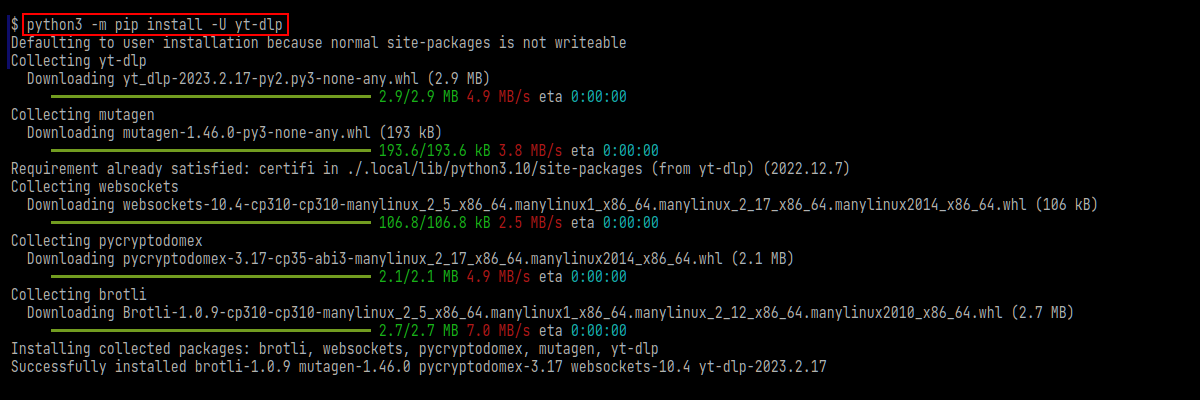
yt-dlpはPython 3.7以上の環境で動作します。つまりyoutube-dlとは異なり古いPythonでは動作しません。youtube-dlと同じくffmpegもインストールしておきます。
python3 -m pip install -U yt-dlp (インストール/更新共に)
yt-dlpのインストール (最近のLinux用)
Ubuntu 24.04 LTS系のLinuxディストリビューションではおそらく旧来の方法だとPythonアプリのシステムへのインストールを断られるようになっています。回避方法はいろいろあるようですが、簡単なのはpipxを使う方法です。
$ sudo apt install pipx
$ pipx install yt-dlp (インストール こちらはsudoは使いません)
または
$ pipx upgrade yt-dlp (アップデート こちらはsudoは使いません)
2025年11月18日追記:
YouTubeについてはyt-dlpだけでは機能しなくなったようです。
外部JavascriptランタイムのDenoをインストールします。
$ cd ~
$ curl -fsSL https://deno.land/install.sh | sh
管理者になったりsudoを使う必要はないようです。
使い方の変更点についてはこのページの最後に。
yt-dlpの使い方
基本形$ yt-dlp 動画URL または $ yt-dlp 動画ID または $ yt-dlp プレイリストID (プレイリストIDの前に -i を追加するとエラーを無視するのでオススメ)
YouTubeだと https://www.youtube.com/watch?v=00000000000 のようなのが動画URL、そのv=の後の00000000000が動画ID。
https://www.youtube.com/watch?v=00000000000&list=AAAAAAAAAAAAA のlist=の後のAAAAAAAAAAAAAがプレイリストID。
基本的には最高品質の動画(と音声)をダウンロードするということになっています。これはyoutube-dlも同じです。特に考えずに利用する場合は上の様に単純に動画IDまたは動画URLを引数に指定するだけです。
プレイリストIDと動画IDが同時に含まれるURL(再生中のプレイリストURLなど)を指定するとプレイリストは無視され1つの動画だけが取得されるのでご注意ください。
yt-dlpのオプション
指定できるオプションは豊富すぎるほどあります。多くは使わないかもしれませんが、イザというときに使えるよう存在を知っておくのが良さそうです。
Options:
General Options:
-h, --help Print this help text and exit
--version Print program version and exit
-U, --update Check if updates are available. You installed yt-dlp with pip or using the
wheel from PyPi; Use that to update
--no-update Do not check for updates (default)
-i, --ignore-errors Ignore download and postprocessing errors. The download will be considered
successful even if the postprocessing fails
--no-abort-on-error Continue with next video on download errors; e.g. to skip unavailable
videos in a playlist (default)
--abort-on-error Abort downloading of further videos if an error occurs (Alias: --no-
ignore-errors)
--dump-user-agent Display the current user-agent and exit
--list-extractors List all supported extractors and exit
--extractor-descriptions Output descriptions of all supported extractors and exit
--use-extractors NAMES Extractor names to use separated by commas. You can also use regexes,
"all", "default" and "end" (end URL matching); e.g. --ies
"holodex.*,end,youtube". Prefix the name with a "-" to exclude it, e.g.
--ies default,-generic. Use --list-extractors for a list of extractor
names. (Alias: --ies)
--default-search PREFIX Use this prefix for unqualified URLs. E.g. "gvsearch2:python" downloads
two videos from google videos for the search term "python". Use the value
"auto" to let yt-dlp guess ("auto_warning" to emit a warning when
guessing). "error" just throws an error. The default value "fixup_error"
repairs broken URLs, but emits an error if this is not possible instead of
searching
--ignore-config Don't load any more configuration files except those given by --config-
locations. For backward compatibility, if this option is found inside the
system configuration file, the user configuration is not loaded. (Alias:
--no-config)
--no-config-locations Do not load any custom configuration files (default). When given inside a
configuration file, ignore all previous --config-locations defined in the
current file
--config-locations PATH Location of the main configuration file; either the path to the config or
its containing directory ("-" for stdin). Can be used multiple times and
inside other configuration files
--flat-playlist Do not extract the videos of a playlist, only list them
--no-flat-playlist Extract the videos of a playlist
--live-from-start Download livestreams from the start. Currently only supported for YouTube
(Experimental)
--no-live-from-start Download livestreams from the current time (default)
--wait-for-video MIN[-MAX] Wait for scheduled streams to become available. Pass the minimum number of
seconds (or range) to wait between retries
--no-wait-for-video Do not wait for scheduled streams (default)
--mark-watched Mark videos watched (even with --simulate)
--no-mark-watched Do not mark videos watched (default)
--no-colors Do not emit color codes in output (Alias: --no-colours)
--compat-options OPTS Options that can help keep compatibility with youtube-dl or youtube-dlc
configurations by reverting some of the changes made in yt-dlp. See
"Differences in default behavior" for details
--alias ALIASES OPTIONS Create aliases for an option string. Unless an alias starts with a dash
"-", it is prefixed with "--". Arguments are parsed according to the
Python string formatting mini-language. E.g. --alias get-audio,-X
"-S=aext:{0},abr -x --audio-format {0}" creates options "--get-audio" and
"-X" that takes an argument (ARG0) and expands to "-S=aext:ARG0,abr -x
--audio-format ARG0". All defined aliases are listed in the --help output.
Alias options can trigger more aliases; so be careful to avoid defining
recursive options. As a safety measure, each alias may be triggered a
maximum of 100 times. This option can be used multiple times
Network Options:
--proxy URL Use the specified HTTP/HTTPS/SOCKS proxy. To enable SOCKS proxy, specify a
proper scheme, e.g. socks5://user:pass@127.0.0.1:1080/. Pass in an empty
string (--proxy "") for direct connection
--socket-timeout SECONDS Time to wait before giving up, in seconds
--source-address IP Client-side IP address to bind to
-4, --force-ipv4 Make all connections via IPv4
-6, --force-ipv6 Make all connections via IPv6
--enable-file-urls Enable file:// URLs. This is disabled by default for security reasons.
Geo-restriction:
--geo-verification-proxy URL Use this proxy to verify the IP address for some geo-restricted sites. The
default proxy specified by --proxy (or none, if the option is not present)
is used for the actual downloading
--geo-bypass Bypass geographic restriction via faking X-Forwarded-For HTTP header
(default)
--no-geo-bypass Do not bypass geographic restriction via faking X-Forwarded-For HTTP
header
--geo-bypass-country CODE Force bypass geographic restriction with explicitly provided two-letter
ISO 3166-2 country code
--geo-bypass-ip-block IP_BLOCK Force bypass geographic restriction with explicitly provided IP block in
CIDR notation
Video Selection:
-I, --playlist-items ITEM_SPEC Comma separated playlist_index of the items to download. You can specify a
range using "[START]:[STOP][:STEP]". For backward compatibility, START-
STOP is also supported. Use negative indices to count from the right and
negative STEP to download in reverse order. E.g. "-I 1:3,7,-5::2" used on
a playlist of size 15 will download the items at index 1,2,3,7,11,13,15
--min-filesize SIZE Abort download if filesize is smaller than SIZE, e.g. 50k or 44.6M
--max-filesize SIZE Abort download if filesize is larger than SIZE, e.g. 50k or 44.6M
--date DATE Download only videos uploaded on this date. The date can be "YYYYMMDD" or
in the format [now|today|yesterday][-N[day|week|month|year]]. E.g. "--date
today-2weeks" downloads only videos uploaded on the same day two weeks ago
--datebefore DATE Download only videos uploaded on or before this date. The date formats
accepted is the same as --date
--dateafter DATE Download only videos uploaded on or after this date. The date formats
accepted is the same as --date
--match-filters FILTER Generic video filter. Any "OUTPUT TEMPLATE" field can be compared with a
number or a string using the operators defined in "Filtering Formats". You
can also simply specify a field to match if the field is present, use
"!field" to check if the field is not present, and "&" to check multiple
conditions. Use a "\" to escape "&" or quotes if needed. If used multiple
times, the filter matches if atleast one of the conditions are met. E.g.
--match-filter !is_live --match-filter "like_count>?100 &
description~='(?i)\bcats \& dogs\b'" matches only videos that are not live
OR those that have a like count more than 100 (or the like field is not
available) and also has a description that contains the phrase "cats &
dogs" (caseless). Use "--match-filter -" to interactively ask whether to
download each video
--no-match-filter Do not use generic video filter (default)
--no-playlist Download only the video, if the URL refers to a video and a playlist
--yes-playlist Download the playlist, if the URL refers to a video and a playlist
--age-limit YEARS Download only videos suitable for the given age
--download-archive FILE Download only videos not listed in the archive file. Record the IDs of all
downloaded videos in it
--no-download-archive Do not use archive file (default)
--max-downloads NUMBER Abort after downloading NUMBER files
--break-on-existing Stop the download process when encountering a file that is in the archive
--break-on-reject Stop the download process when encountering a file that has been filtered
out
--break-per-input Alters --max-downloads, --break-on-existing, --break-on-reject, and
autonumber to reset per input URL
--no-break-per-input --break-on-existing and similar options terminates the entire download
queue
--skip-playlist-after-errors N Number of allowed failures until the rest of the playlist is skipped
Download Options:
-N, --concurrent-fragments N Number of fragments of a dash/hlsnative video that should be downloaded
concurrently (default is 1)
-r, --limit-rate RATE Maximum download rate in bytes per second, e.g. 50K or 4.2M
--throttled-rate RATE Minimum download rate in bytes per second below which throttling is
assumed and the video data is re-extracted, e.g. 100K
-R, --retries RETRIES Number of retries (default is 10), or "infinite"
--file-access-retries RETRIES Number of times to retry on file access error (default is 3), or
"infinite"
--fragment-retries RETRIES Number of retries for a fragment (default is 10), or "infinite" (DASH,
hlsnative and ISM)
--retry-sleep [TYPE:]EXPR Time to sleep between retries in seconds (optionally) prefixed by the type
of retry (http (default), fragment, file_access, extractor) to apply the
sleep to. EXPR can be a number, linear=START[:END[:STEP=1]] or
exp=START[:END[:BASE=2]]. This option can be used multiple times to set
the sleep for the different retry types, e.g. --retry-sleep linear=1::2
--retry-sleep fragment:exp=1:20
--skip-unavailable-fragments Skip unavailable fragments for DASH, hlsnative and ISM downloads (default)
(Alias: --no-abort-on-unavailable-fragments)
--abort-on-unavailable-fragments Abort download if a fragment is unavailable (Alias: --no-skip-unavailable-
fragments)
--keep-fragments Keep downloaded fragments on disk after downloading is finished
--no-keep-fragments Delete downloaded fragments after downloading is finished (default)
--buffer-size SIZE Size of download buffer, e.g. 1024 or 16K (default is 1024)
--resize-buffer The buffer size is automatically resized from an initial value of
--buffer-size (default)
--no-resize-buffer Do not automatically adjust the buffer size
--http-chunk-size SIZE Size of a chunk for chunk-based HTTP downloading, e.g. 10485760 or 10M
(default is disabled). May be useful for bypassing bandwidth throttling
imposed by a webserver (experimental)
--playlist-random Download playlist videos in random order
--lazy-playlist Process entries in the playlist as they are received. This disables
n_entries, --playlist-random and --playlist-reverse
--no-lazy-playlist Process videos in the playlist only after the entire playlist is parsed
(default)
--xattr-set-filesize Set file xattribute ytdl.filesize with expected file size
--hls-use-mpegts Use the mpegts container for HLS videos; allowing some players to play the
video while downloading, and reducing the chance of file corruption if
download is interrupted. This is enabled by default for live streams
--no-hls-use-mpegts Do not use the mpegts container for HLS videos. This is default when not
downloading live streams
--download-sections REGEX Download only chapters whose title matches the given regular expression.
Time ranges prefixed by a "*" can also be used in place of chapters to
download the specified range. Needs ffmpeg. This option can be used
multiple times to download multiple sections, e.g. --download-sections
"*10:15-inf" --download-sections "intro"
--downloader [PROTO:]NAME Name or path of the external downloader to use (optionally) prefixed by
the protocols (http, ftp, m3u8, dash, rstp, rtmp, mms) to use it for.
Currently supports native, aria2c, avconv, axel, curl, ffmpeg, httpie,
wget. You can use this option multiple times to set different downloaders
for different protocols. E.g. --downloader aria2c --downloader
"dash,m3u8:native" will use aria2c for http/ftp downloads, and the native
downloader for dash/m3u8 downloads (Alias: --external-downloader)
--downloader-args NAME:ARGS Give these arguments to the external downloader. Specify the downloader
name and the arguments separated by a colon ":". For ffmpeg, arguments can
be passed to different positions using the same syntax as --postprocessor-
args. You can use this option multiple times to give different arguments
to different downloaders (Alias: --external-downloader-args)
Filesystem Options:
-a, --batch-file FILE File containing URLs to download ("-" for stdin), one URL per line. Lines
starting with "#", ";" or "]" are considered as comments and ignored
--no-batch-file Do not read URLs from batch file (default)
-P, --paths [TYPES:]PATH The paths where the files should be downloaded. Specify the type of file
and the path separated by a colon ":". All the same TYPES as --output are
supported. Additionally, you can also provide "home" (default) and "temp"
paths. All intermediary files are first downloaded to the temp path and
then the final files are moved over to the home path after download is
finished. This option is ignored if --output is an absolute path
-o, --output [TYPES:]TEMPLATE Output filename template; see "OUTPUT TEMPLATE" for details
--output-na-placeholder TEXT Placeholder for unavailable fields in "OUTPUT TEMPLATE" (default: "NA")
--restrict-filenames Restrict filenames to only ASCII characters, and avoid "&" and spaces in
filenames
--no-restrict-filenames Allow Unicode characters, "&" and spaces in filenames (default)
--windows-filenames Force filenames to be Windows-compatible
--no-windows-filenames Make filenames Windows-compatible only if using Windows (default)
--trim-filenames LENGTH Limit the filename length (excluding extension) to the specified number of
characters
-w, --no-overwrites Do not overwrite any files
--force-overwrites Overwrite all video and metadata files. This option includes --no-continue
--no-force-overwrites Do not overwrite the video, but overwrite related files (default)
-c, --continue Resume partially downloaded files/fragments (default)
--no-continue Do not resume partially downloaded fragments. If the file is not
fragmented, restart download of the entire file
--part Use .part files instead of writing directly into output file (default)
--no-part Do not use .part files - write directly into output file
--mtime Use the Last-modified header to set the file modification time (default)
--no-mtime Do not use the Last-modified header to set the file modification time
--write-description Write video description to a .description file
--no-write-description Do not write video description (default)
--write-info-json Write video metadata to a .info.json file (this may contain personal
information)
--no-write-info-json Do not write video metadata (default)
--write-playlist-metafiles Write playlist metadata in addition to the video metadata when using
--write-info-json, --write-description etc. (default)
--no-write-playlist-metafiles Do not write playlist metadata when using --write-info-json, --write-
description etc.
--clean-info-json Remove some private fields such as filenames from the infojson. Note that
it could still contain some personal information (default)
--no-clean-info-json Write all fields to the infojson
--write-comments Retrieve video comments to be placed in the infojson. The comments are
fetched even without this option if the extraction is known to be quick
(Alias: --get-comments)
--no-write-comments Do not retrieve video comments unless the extraction is known to be quick
(Alias: --no-get-comments)
--load-info-json FILE JSON file containing the video information (created with the "--write-
info-json" option)
--cookies FILE Netscape formatted file to read cookies from and dump cookie jar in
--no-cookies Do not read/dump cookies from/to file (default)
--cookies-from-browser BROWSER[+KEYRING][:PROFILE][::CONTAINER]
The name of the browser to load cookies from. Currently supported browsers
are: brave, chrome, chromium, edge, firefox, opera, safari, vivaldi.
Optionally, the KEYRING used for decrypting Chromium cookies on Linux, the
name/path of the PROFILE to load cookies from, and the CONTAINER name (if
Firefox) ("none" for no container) can be given with their respective
seperators. By default, all containers of the most recently accessed
profile are used. Currently supported keyrings are: basictext,
gnomekeyring, kwallet
--no-cookies-from-browser Do not load cookies from browser (default)
--cache-dir DIR Location in the filesystem where yt-dlp can store some downloaded
information (such as client ids and signatures) permanently. By default
${XDG_CACHE_HOME}/yt-dlp
--no-cache-dir Disable filesystem caching
--rm-cache-dir Delete all filesystem cache files
Thumbnail Options:
--write-thumbnail Write thumbnail image to disk
--no-write-thumbnail Do not write thumbnail image to disk (default)
--write-all-thumbnails Write all thumbnail image formats to disk
--list-thumbnails List available thumbnails of each video. Simulate unless --no-simulate is
used
Internet Shortcut Options:
--write-link Write an internet shortcut file, depending on the current platform (.url,
.webloc or .desktop). The URL may be cached by the OS
--write-url-link Write a .url Windows internet shortcut. The OS caches the URL based on the
file path
--write-webloc-link Write a .webloc macOS internet shortcut
--write-desktop-link Write a .desktop Linux internet shortcut
Verbosity and Simulation Options:
-q, --quiet Activate quiet mode. If used with --verbose, print the log to stderr
--no-warnings Ignore warnings
-s, --simulate Do not download the video and do not write anything to disk
--no-simulate Download the video even if printing/listing options are used
--ignore-no-formats-error Ignore "No video formats" error. Useful for extracting metadata even if
the videos are not actually available for download (experimental)
--no-ignore-no-formats-error Throw error when no downloadable video formats are found (default)
--skip-download Do not download the video but write all related files (Alias: --no-
download)
-O, --print [WHEN:]TEMPLATE Field name or output template to print to screen, optionally prefixed with
when to print it, separated by a ":". Supported values of "WHEN" are the
same as that of --use-postprocessor (default: video). Implies --quiet.
Implies --simulate unless --no-simulate or later stages of WHEN are used.
This option can be used multiple times
--print-to-file [WHEN:]TEMPLATE FILE Append given template to the file. The values of WHEN and TEMPLATE are
same as that of --print. FILE uses the same syntax as the output template.
This option can be used multiple times
-j, --dump-json Quiet, but print JSON information for each video. Simulate unless --no-
simulate is used. See "OUTPUT TEMPLATE" for a description of available
keys
-J, --dump-single-json Quiet, but print JSON information for each url or infojson passed.
Simulate unless --no-simulate is used. If the URL refers to a playlist,
the whole playlist information is dumped in a single line
--force-write-archive Force download archive entries to be written as far as no errors occur,
even if -s or another simulation option is used (Alias: --force-download-
archive)
--newline Output progress bar as new lines
--no-progress Do not print progress bar
--progress Show progress bar, even if in quiet mode
--console-title Display progress in console titlebar
--progress-template [TYPES:]TEMPLATE Template for progress outputs, optionally prefixed with one of "download:"
(default), "download-title:" (the console title), "postprocess:", or
"postprocess-title:". The video's fields are accessible under the "info"
key and the progress attributes are accessible under "progress" key. E.g.
--console-title --progress-template "download-
title:%(info.id)s-%(progress.eta)s"
-v, --verbose Print various debugging information
--dump-pages Print downloaded pages encoded using base64 to debug problems (very
verbose)
--write-pages Write downloaded intermediary pages to files in the current directory to
debug problems
--print-traffic Display sent and read HTTP traffic
Workarounds:
--encoding ENCODING Force the specified encoding (experimental)
--legacy-server-connect Explicitly allow HTTPS connection to servers that do not support RFC 5746
secure renegotiation
--no-check-certificates Suppress HTTPS certificate validation
--prefer-insecure Use an unencrypted connection to retrieve information about the video
(Currently supported only for YouTube)
--add-headers FIELD:VALUE Specify a custom HTTP header and its value, separated by a colon ":". You
can use this option multiple times
--bidi-workaround Work around terminals that lack bidirectional text support. Requires bidiv
or fribidi executable in PATH
--sleep-requests SECONDS Number of seconds to sleep between requests during data extraction
--sleep-interval SECONDS Number of seconds to sleep before each download. This is the minimum time
to sleep when used along with --max-sleep-interval (Alias: --min-sleep-
interval)
--max-sleep-interval SECONDS Maximum number of seconds to sleep. Can only be used along with --min-
sleep-interval
--sleep-subtitles SECONDS Number of seconds to sleep before each subtitle download
Video Format Options:
-f, --format FORMAT Video format code, see "FORMAT SELECTION" for more details
-S, --format-sort SORTORDER Sort the formats by the fields given, see "Sorting Formats" for more
details
--format-sort-force Force user specified sort order to have precedence over all fields, see
"Sorting Formats" for more details (Alias: --S-force)
--no-format-sort-force Some fields have precedence over the user specified sort order (default)
--video-multistreams Allow multiple video streams to be merged into a single file
--no-video-multistreams Only one video stream is downloaded for each output file (default)
--audio-multistreams Allow multiple audio streams to be merged into a single file
--no-audio-multistreams Only one audio stream is downloaded for each output file (default)
--prefer-free-formats Prefer video formats with free containers over non-free ones of same
quality. Use with "-S ext" to strictly prefer free containers irrespective
of quality
--no-prefer-free-formats Don't give any special preference to free containers (default)
--check-formats Make sure formats are selected only from those that are actually
downloadable
--check-all-formats Check all formats for whether they are actually downloadable
--no-check-formats Do not check that the formats are actually downloadable
-F, --list-formats List available formats of each video. Simulate unless --no-simulate is
used
--merge-output-format FORMAT Containers that may be used when merging formats, separated by "/", e.g.
"mp4/mkv". Ignored if no merge is required. (currently supported: avi,
flv, mkv, mov, mp4, webm)
Subtitle Options:
--write-subs Write subtitle file
--no-write-subs Do not write subtitle file (default)
--write-auto-subs Write automatically generated subtitle file (Alias: --write-automatic-
subs)
--no-write-auto-subs Do not write auto-generated subtitles (default) (Alias: --no-write-
automatic-subs)
--list-subs List available subtitles of each video. Simulate unless --no-simulate is
used
--sub-format FORMAT Subtitle format; accepts formats preference, e.g. "srt" or "ass/srt/best"
--sub-langs LANGS Languages of the subtitles to download (can be regex) or "all" separated
by commas, e.g. --sub-langs "en.*,ja". You can prefix the language code
with a "-" to exclude it from the requested languages, e.g. --sub-langs
all,-live_chat. Use --list-subs for a list of available language tags
Authentication Options:
-u, --username USERNAME Login with this account ID
-p, --password PASSWORD Account password. If this option is left out, yt-dlp will ask
interactively
-2, --twofactor TWOFACTOR Two-factor authentication code
-n, --netrc Use .netrc authentication data
--netrc-location PATH Location of .netrc authentication data; either the path or its containing
directory. Defaults to ~/.netrc
--video-password PASSWORD Video password (vimeo, youku)
--ap-mso MSO Adobe Pass multiple-system operator (TV provider) identifier, use --ap-
list-mso for a list of available MSOs
--ap-username USERNAME Multiple-system operator account login
--ap-password PASSWORD Multiple-system operator account password. If this option is left out, yt-
dlp will ask interactively
--ap-list-mso List all supported multiple-system operators
--client-certificate CERTFILE Path to client certificate file in PEM format. May include the private key
--client-certificate-key KEYFILE Path to private key file for client certificate
--client-certificate-password PASSWORD Password for client certificate private key, if encrypted. If not
provided, and the key is encrypted, yt-dlp will ask interactively
Post-Processing Options:
-x, --extract-audio Convert video files to audio-only files (requires ffmpeg and ffprobe)
--audio-format FORMAT Format to convert the audio to when -x is used. (currently supported: best
(default), aac, alac, flac, m4a, mp3, opus, vorbis, wav). You can specify
multiple rules using similar syntax as --remux-video
--audio-quality QUALITY Specify ffmpeg audio quality to use when converting the audio with -x.
Insert a value between 0 (best) and 10 (worst) for VBR or a specific
bitrate like 128K (default 5)
--remux-video FORMAT Remux the video into another container if necessary (currently supported:
avi, flv, gif, mkv, mov, mp4, webm, aac, aiff, alac, flac, m4a, mka, mp3,
ogg, opus, vorbis, wav). If target container does not support the
video/audio codec, remuxing will fail. You can specify multiple rules;
e.g. "aac>m4a/mov>mp4/mkv" will remux aac to m4a, mov to mp4 and anything
else to mkv
--recode-video FORMAT Re-encode the video into another format if necessary. The syntax and
supported formats are the same as --remux-video
--postprocessor-args NAME:ARGS Give these arguments to the postprocessors. Specify the
postprocessor/executable name and the arguments separated by a colon ":"
to give the argument to the specified postprocessor/executable. Supported
PP are: Merger, ModifyChapters, SplitChapters, ExtractAudio, VideoRemuxer,
VideoConvertor, Metadata, EmbedSubtitle, EmbedThumbnail,
SubtitlesConvertor, ThumbnailsConvertor, FixupStretched, FixupM4a,
FixupM3u8, FixupTimestamp and FixupDuration. The supported executables
are: AtomicParsley, FFmpeg and FFprobe. You can also specify "PP+EXE:ARGS"
to give the arguments to the specified executable only when being used by
the specified postprocessor. Additionally, for ffmpeg/ffprobe, "_i"/"_o"
can be appended to the prefix optionally followed by a number to pass the
argument before the specified input/output file, e.g. --ppa
"Merger+ffmpeg_i1:-v quiet". You can use this option multiple times to
give different arguments to different postprocessors. (Alias: --ppa)
-k, --keep-video Keep the intermediate video file on disk after post-processing
--no-keep-video Delete the intermediate video file after post-processing (default)
--post-overwrites Overwrite post-processed files (default)
--no-post-overwrites Do not overwrite post-processed files
--embed-subs Embed subtitles in the video (only for mp4, webm and mkv videos)
--no-embed-subs Do not embed subtitles (default)
--embed-thumbnail Embed thumbnail in the video as cover art
--no-embed-thumbnail Do not embed thumbnail (default)
--embed-metadata Embed metadata to the video file. Also embeds chapters/infojson if present
unless --no-embed-chapters/--no-embed-info-json are used (Alias: --add-
metadata)
--no-embed-metadata Do not add metadata to file (default) (Alias: --no-add-metadata)
--embed-chapters Add chapter markers to the video file (Alias: --add-chapters)
--no-embed-chapters Do not add chapter markers (default) (Alias: --no-add-chapters)
--embed-info-json Embed the infojson as an attachment to mkv/mka video files
--no-embed-info-json Do not embed the infojson as an attachment to the video file
--parse-metadata [WHEN:]FROM:TO Parse additional metadata like title/artist from other fields; see
"MODIFYING METADATA" for details. Supported values of "WHEN" are the same
as that of --use-postprocessor (default: pre_process)
--replace-in-metadata [WHEN:]FIELDS REGEX REPLACE Replace text in a metadata field using the given regex. This option can be
used multiple times. Supported values of "WHEN" are the same as that of
--use-postprocessor (default: pre_process)
--xattrs Write metadata to the video file's xattrs (using dublin core and xdg
standards)
--concat-playlist POLICY Concatenate videos in a playlist. One of "never", "always", or
"multi_video" (default; only when the videos form a single show). All the
video files must have same codecs and number of streams to be concatable.
The "pl_video:" prefix can be used with "--paths" and "--output" to set
the output filename for the concatenated files. See "OUTPUT TEMPLATE" for
details
--fixup POLICY Automatically correct known faults of the file. One of never (do nothing),
warn (only emit a warning), detect_or_warn (the default; fix file if we
can, warn otherwise), force (try fixing even if file already exists)
--ffmpeg-location PATH Location of the ffmpeg binary; either the path to the binary or its
containing directory
--exec [WHEN:]CMD Execute a command, optionally prefixed with when to execute it, separated
by a ":". Supported values of "WHEN" are the same as that of --use-
postprocessor (default: after_move). Same syntax as the output template
can be used to pass any field as arguments to the command. After download,
an additional field "filepath" that contains the final path of the
downloaded file is also available, and if no fields are passed,
%(filepath,_filename|)q is appended to the end of the command. This option
can be used multiple times
--no-exec Remove any previously defined --exec
--convert-subs FORMAT Convert the subtitles to another format (currently supported: ass, lrc,
srt, vtt) (Alias: --convert-subtitles)
--convert-thumbnails FORMAT Convert the thumbnails to another format (currently supported: jpg, png,
webp). You can specify multiple rules using similar syntax as --remux-
video
--split-chapters Split video into multiple files based on internal chapters. The "chapter:"
prefix can be used with "--paths" and "--output" to set the output
filename for the split files. See "OUTPUT TEMPLATE" for details
--no-split-chapters Do not split video based on chapters (default)
--remove-chapters REGEX Remove chapters whose title matches the given regular expression. The
syntax is the same as --download-sections. This option can be used
multiple times
--no-remove-chapters Do not remove any chapters from the file (default)
--force-keyframes-at-cuts Force keyframes at cuts when downloading/splitting/removing sections. This
is slow due to needing a re-encode, but the resulting video may have fewer
artifacts around the cuts
--no-force-keyframes-at-cuts Do not force keyframes around the chapters when cutting/splitting
(default)
--use-postprocessor NAME[:ARGS] The (case sensitive) name of plugin postprocessors to be enabled, and
(optionally) arguments to be passed to it, separated by a colon ":". ARGS
are a semicolon ";" delimited list of NAME=VALUE. The "when" argument
determines when the postprocessor is invoked. It can be one of
"pre_process" (after video extraction), "after_filter" (after video passes
filter), "video" (after --format; before --print/--output), "before_dl"
(before each video download), "post_process" (after each video download;
default), "after_move" (after moving video file to it's final locations),
"after_video" (after downloading and processing all formats of a video),
or "playlist" (at end of playlist). This option can be used multiple times
to add different postprocessors
SponsorBlock Options:
Make chapter entries for, or remove various segments (sponsor, introductions, etc.) from downloaded YouTube videos using the
SponsorBlock API (https://sponsor.ajay.app)
--sponsorblock-mark CATS SponsorBlock categories to create chapters for, separated by commas.
Available categories are sponsor, intro, outro, selfpromo, preview,
filler, interaction, music_offtopic, poi_highlight, chapter, all and
default (=all). You can prefix the category with a "-" to exclude it. See
[1] for description of the categories. E.g. --sponsorblock-mark
all,-preview [1] https://wiki.sponsor.ajay.app/w/Segment_Categories
--sponsorblock-remove CATS SponsorBlock categories to be removed from the video file, separated by
commas. If a category is present in both mark and remove, remove takes
precedence. The syntax and available categories are the same as for
--sponsorblock-mark except that "default" refers to "all,-filler" and
poi_highlight, chapter are not available
--sponsorblock-chapter-title TEMPLATE An output template for the title of the SponsorBlock chapters created by
--sponsorblock-mark. The only available fields are start_time, end_time,
category, categories, name, category_names. Defaults to "[SponsorBlock]:
%(category_names)l"
--no-sponsorblock Disable both --sponsorblock-mark and --sponsorblock-remove
--sponsorblock-api URL SponsorBlock API location, defaults to https://sponsor.ajay.app
Extractor Options:
--extractor-retries RETRIES Number of retries for known extractor errors (default is 3), or "infinite"
--allow-dynamic-mpd Process dynamic DASH manifests (default) (Alias: --no-ignore-dynamic-mpd)
--ignore-dynamic-mpd Do not process dynamic DASH manifests (Alias: --no-allow-dynamic-mpd)
--hls-split-discontinuity Split HLS playlists to different formats at discontinuities such as ad
breaks
--no-hls-split-discontinuity Do not split HLS playlists to different formats at discontinuities such as
ad breaks (default)
--extractor-args IE_KEY:ARGS Pass ARGS arguments to the IE_KEY extractor. See "EXTRACTOR ARGUMENTS" for
details. You can use this option multiple times to give arguments for
different extractors
フォーマットを指定したダウンロード
YouTubeだと1つの動画と思っているものが実は複数の形式で保管されています。また、動画ファイルの種類が複数あるだけでなく、動画ファイルに含まれる動画・音声のフォーマットも複数あります。フォーマットを指定すれば期待通りの動画・音声を取得できます。
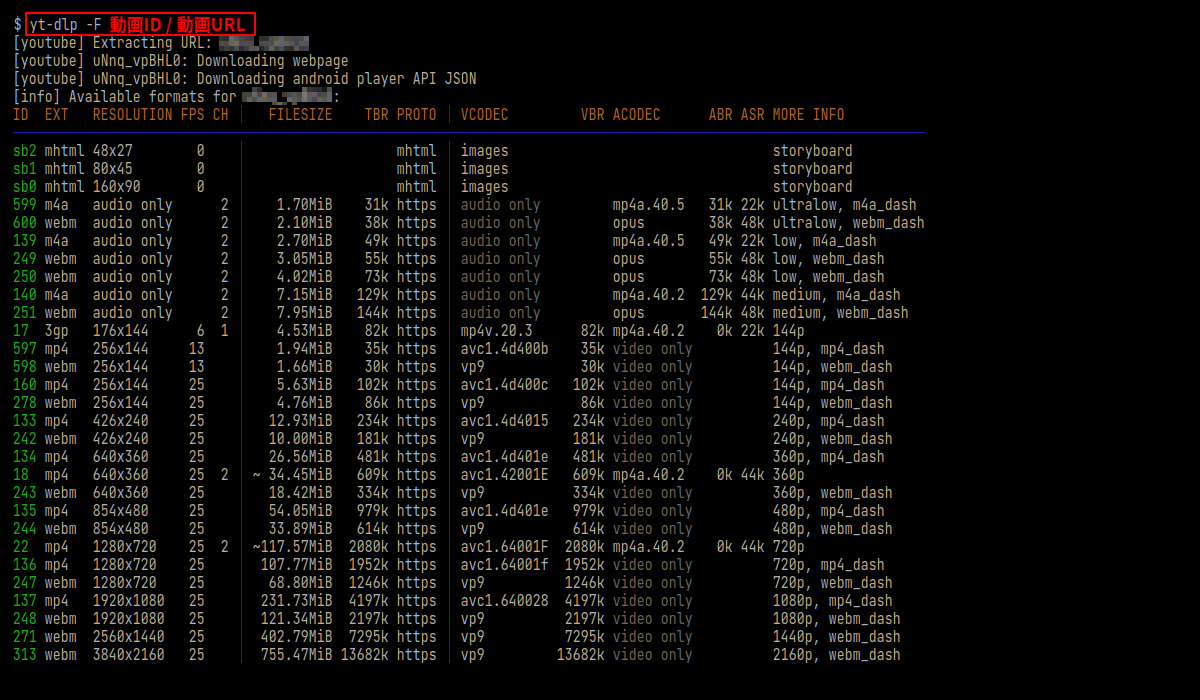
yt-dlp -F 動画ID or 動画URL でその動画で利用できる映像/音声のフォーマットリストが表示されます。
行頭の緑の数字がフォーマットコードなので、上の例ではmp4の動画の1920x1080の解像度は137、音声の44kHzのm4aは140ということが判ります。
ダウンロードしたい動画によって存在するフォーマットが違うことがあるので、例えばどの動画でもフォーマットコード137のmp4動画1920x1080があるとは限りません。10年以上前の古い動画だとVGA解像度以下しかないのもザラです。
フォーマットによってはvideo only(音声なしの動画) / audio only(動画なしの音声) / 動画+音声があります。つまり1つのフォーマットだけでは完全な音声付き動画ではないことがあります。
今回はHD+解像度のMP4動画で音声付きのフォーマット番号22をダウンロードすることにします。(次)

$ yt-dlp -f 22 動画ID or 動画URL (小文字の-fです)
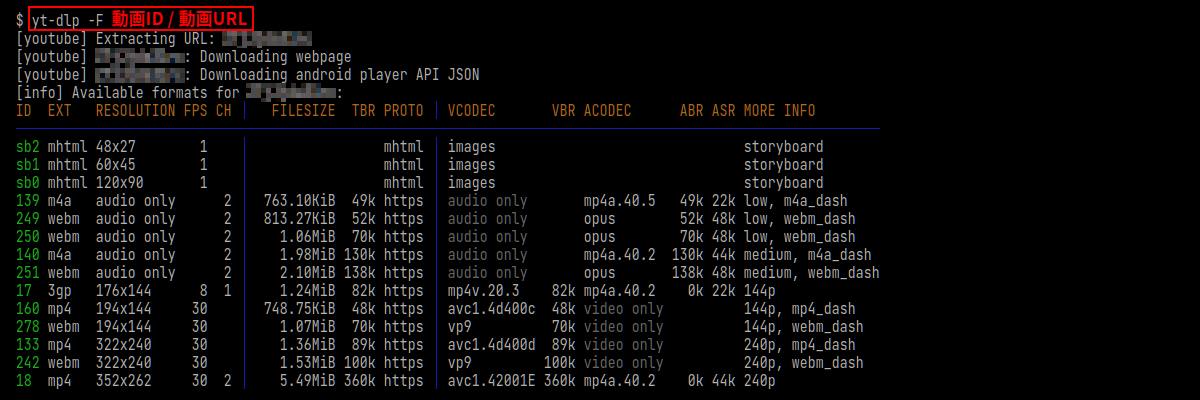
今度は違う動画です。含まれるフォーマットの数が減っています。
動画は、322x240pxのMP4のフォーマットコード番号133、
音声は、44kのm4aのフォーマットコード番号140をダウンロードすることにします。(次)
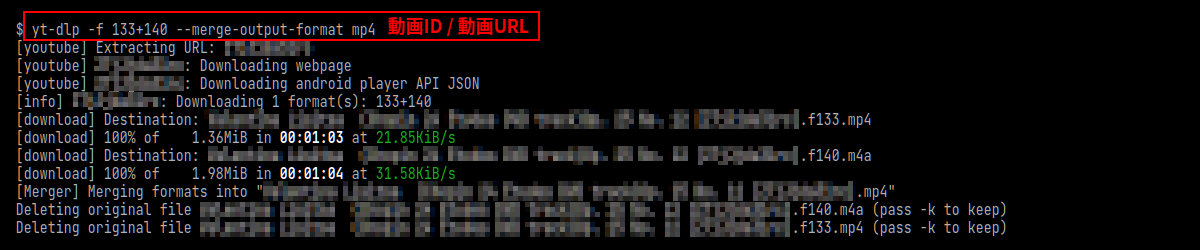
mp4動画とm4a音声の2つをダウンロードして1つのmp4動画にマージします。
$ yt-dlp -f 133+140 --merge-output-format mp4 動画ID or 動画URL
動画から音声だけをFLAC形式で取得する
$ yt-dlp -x --audio-format flac 動画ID or 動画URL (元のフォーマット未指定)
$ yt-dlp -f 251 -x --audio-format flac --audio-quality 0 動画ID or 動画URL (元のフォーマット指定)--audio-quality 0で出力するFLACの最高品質を指定しています。
動画から音声とサムネイル(アートワーク/カバーアート)をFLAC形式で取得する
$ yt-dlp -x --embed-thumbnail --audio-format flac 動画ID or 動画URL (元のフォーマット未指定)
この場合、カバーアートという楽曲ファイルのタグを編集することになるため基本的にはpythonのmutagenモジュールが必要になります。
$ sudo apt isntall python3-mutagen (インストールしないでください、以下)
ただし、Debian, Ubuntuでは実際にはpython3-mutagenはアプリから上手く呼び出せないという問題があります。mutagenを使用する場合にはPythonの仮想環境を作成してyt-dlpとmutagenをその環境用にインストールするのが簡単です。(以下)
# === 既存ファイル削除 ===================================
# aptでインストールした mutagen / yt-dlp がもしあれば全部消す
$ sudo apt remove --purge python3-mutagen yt-dlp
$ sudo rm -f /usr/local/bin/yt-dlp

# pipでインストールしたユーザー用の mutagen があれば残骸を全削除
$ PYSITE=$(python3 -c "import site, sys; print(site.getusersitepackages())")
$ python3 -m pip uninstall -y mutagen
$ rm -rf "$PYSITE"/mutagen*
$ rm -rf "$PYSITE"/Mutagen-*.dist-info
$ rm -rf ~/.local/bin/yt-dlp
$ rm -rf ~/.local/bin/mutagen*

# pipx でインストールしたyt-dlp/mutagenがあれば削除
$ pipx uninstall mutagen
$ pipx uninstall yt-dlp

# === 専用仮想環境を新規作成 ====================
$ python3 -m venv ~/py-ve
$ ~/py-ve/bin/pip install --upgrade pip
$ ~/py-ve/bin/pip install mutagen
$ ~/py-ve/bin/pip install --upgrade yt-dlp

# === yt-dlp を普通に呼べるようにする ====================
$ sudo ln -sf ~/py-ve/bin/yt-dlp /usr/local/bin/yt-dlp
ユーザーディレクトリ下に作成する py-veが仮想環境用のディレクトリです。(名前は任意)
変数$PYSITEは一般的には ~/.local/lib/python3.12/site-packages のようなユーザーディレクトリ下の隠しディレクトリになる筈です。3.12の部分は使用中のPythonのバージョンに応じて変わります。
一度もyt-dlpやpython-mutagenを使用したことがないシステムであれば「専用仮想環境を新規作成」以下を実行するだけです。
yt-dlpはPythonの仮想環境にインストールされますが、/usr/local/bin/yt-dlpにシンボリックリンクしているためこれまでと同じく普通にyt-dlpというコマンドで呼び出せます。
mutagenモジュールを使用できない場合は、AtomicParsleyを使用することもできるようです。しかしこちらは詳細は不明です。
$ yt-dlp -x ---compat-options embed-thumbnail-atomicparsley --audio-format flac 動画ID or 動画URL (元のフォーマット未指定)
多くの動画をダウンロードする場合
多くの動画を一挙にダウンロードしようとすると、途中からボットを疑われてダウンロードがエラーになります。ボットではないことを示すためにブラウザのCookieを使用すると回避できます。
ブラウザのCookieはOSとブラウザによって格納Pathが異なるかと思われますが、OSがLinux (Debian/Ubuntu系)でChromeブラウザの場合 ~/.config/google-chrome/ や ~/.config/google-chrome-beta/ などになります。「 ~ 」はユーザーのホームディレクトリを意味するので /home/ユーザー名 等です。このPathはこのオプションを初めて使用する前に実際にCookieが格納されているか確認しておく方が良いと思われます。また、オプションを使用してダウンロードを実行する前にそのサービス(Youtubeなど)をブラウザで閲覧しておかなければ意味がないかと思われます。以下のようなオプションを追加して実行します。
--cookies-from-browser chrome:~/.config/google-chrome-beta/
黄文字部分は自身の使用しているブラウザのCookie保存ディレクトリのPathに置き換えてください。
Cookieを使用して大量にダウンロードする場合は、途中からThe provided YouTube account cookies are no longer valid.という警告が出るようになることがあります。警告なのでダウンロードは失敗にはなりませんが、中断して再ダウンロードする方が良いかもしれません。その場合は以下。
100以上の動画が登録されている巨大なプレイリストからダウンロードする場合、途中からダウンロードがおかしくなったり中断しなければならないことがあります。中断後、最初からダウンロードをやりなおすのではなく、ダウンロード済みはそのままで続きからダウンロードしたいということがあります。yt-dlpにはダウンロードアーカイブというダウンロード済み動画IDをメモする機能があり、ダウンロード済みとして記載されたIDの動画は再ダウンロードされないため、この機能を使うことで中断以降の(ダウンロードが完了していない)動画だけダウンロードすることができます。
以下のようなオプションを追加して実行します。
--download-archive archive.txt
黄文字の部分は任意のファイル名です。
当然ですが、中断前からこのオプションを使用している必要があります。つまり、大きなプレイリストからダウンロードする場合は最初から指定しておくべきです。ダウンロードが完了したらアーカイブテキストは削除して構いません。
他
フォーマットリストを見るのが面倒な場合、 -f bestvideo+bestaudio (最高動画+最高音声)や -f bv.2;ba.2 (2番めに良い動画+2番めに良い音声)のような指定もできますが、最高動画+最高音声ならオプションなしと実質同じですし、2番めに良いというのは使い方としてはちょっと指定する動機がわかりません。
-f "best[height=720]" (HD解像度の最高動画)のような指定は動機として理解できます。
youtube-dlと同じく基本的にはこのフォーマット指定で動画と音声をマージする方法だけ憶えておけば良さそうです。
2025年11月18日追記:
Youtubeについてはyt-dlpだけでは機能しなくなったようです。
以下のようにJavascriptランタイムのオプションを指定します。
$ yt-dlp --js-runtimes deno:~/.deno/bin/deno https://www.youtube.com/watch?v=動画ID他のオプションも必要に応じて追加してください。
~/.deno/bin/deno はDenoがインストールされたディレクトリです。(UNIX系OSでは ~ はユーザーのホームディレクトリを指します)
2025年11月18日現在、対応するJavascriptランタイムはDenoの他にNode, Bun, QuickJSがあるようです。
Javascriptランタイムをインストールしていない場合は、--js-runtimes deno:~/.deno/bin/deno の代わりに --remote-components ejs:github が使えるかもしれません。